Yacht Insurance in Connecticut: Cost, Coverage and Surveys
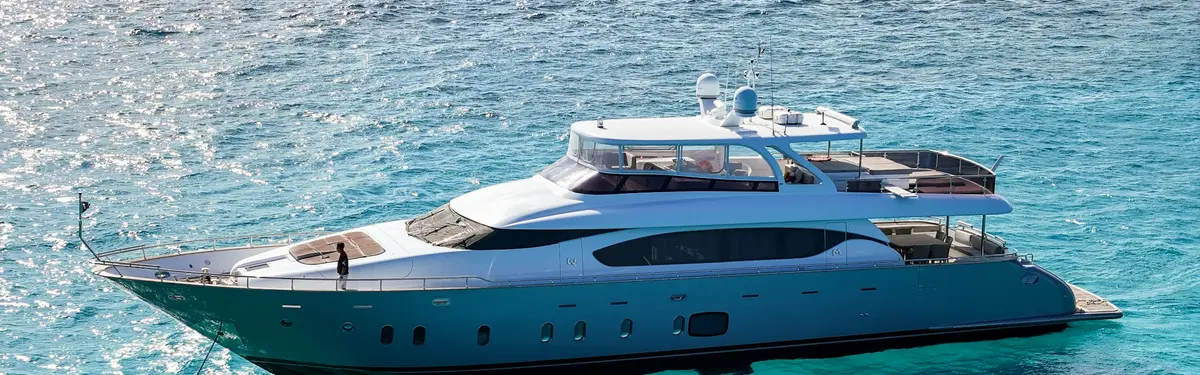
What yacht insurance actually costs in Connecticut, how yacht policies differ from standard boat policies, and why the survey requirement decides whether you can get covered at all.
Where Yacht Coverage Diverges From Boat Coverage
Most carriers treat a vessel as a yacht somewhere around 26 to 27 feet, though value and use matter as much as length. The distinction is not cosmetic. A yacht policy is built on marine legal principles rather than adapted from auto-style forms, and it typically brings broader liability, salvage and wreck-removal provisions, and coverage for the tender.
If you keep a yacht in Connecticut and you are being quoted from a standard small-boat form, that is worth questioning.
What Drives the Premium
Yacht premiums are commonly quoted as a percentage of insured hull value, and where you land in the range depends on a predictable set of factors:
- Hull value and age. Older hulls cost more to insure per dollar of value, and past a certain age some carriers decline entirely.
- Navigation territory. A policy limited to Long Island Sound prices very differently from one extending to Maine, Bermuda or the Caribbean.
- Operator experience. Documented time on comparable vessels matters more than years licensed.
- Crew. Any paid crew introduces employment-related exposure that must be covered separately.
- Named-storm terms. Hurricane deductibles and any requirement to be north of a stated latitude during storm season.
- Layup. A defined out-of-water period reduces premium.
Treat any published figure - including ranges you find online - as an illustration only. A yacht quote is individually underwritten, and two identical hulls can price very differently on operator history alone.
The Survey Requirement
For most yachts past roughly 10 to 15 years old, carriers require a current condition and valuation survey, often refreshed every three to five years. This is where coverage most often stalls in practice.
- Use a surveyor accredited by a recognised body - carriers do reject reports from unaccredited surveyors.
- Expect recommendations to be split into safety items requiring immediate correction and longer-term maintenance notes.
- Unaddressed safety recommendations can suspend or void coverage. Fix them and document the fix.
- An out-of-date survey is a common reason a renewal is declined at the worst possible moment.
Agreed Value Is Close to Non-Negotiable
On a yacht, an actual cash value settlement can leave a very large gap between what you are paid and what a comparable replacement costs. Agreed value fixes the total-loss figure in advance. Confirm it in writing, and revisit the agreed figure when the market moves - being materially over-insured wastes premium, and being under-insured defeats the purpose.
Provisions Worth Confirming Line by Line
- Salvage and wreck removal - ideally in addition to the hull limit, not carved out of it
- Uninsured boater - Connecticut has no insurance mandate for recreational vessels
- Tender and toys - dinghies, jet skis and paddleboards are not automatically included
- Personal effects - usually sub-limited well below what is actually aboard
- Pollution liability - a fuel release is a federal matter, not a local one
- Captain and crew - even occasional paid help creates exposure a standard form will not answer
Questions to Put to Your Agent
- Is this agreed value, and what is the figure?
- What is the named-storm deductible in dollars, not percent?
- Does my navigation territory cover every trip I realistically take?
- When does my survey expire, and what recommendations are outstanding?
- Are salvage and wreck removal inside or outside the hull limit?
Yacht Policy vs. Standard Boat Policy at a Glance
| Feature | Standard boat policy | Yacht policy |
|---|---|---|
| Typical vessel size | Under ~26 ft | ~26 ft and above |
| Hull valuation | Often actual cash value | Usually agreed value |
| Liability form | Adapted general liability | Marine protection & indemnity |
| Salvage / wreck removal | Limited or sub-limited | Broader, often additional to hull limit |
| Tender coverage | Usually separate | Frequently included |
| Survey requirement | Sometimes | Almost always past ~10-15 yrs |
| Paid crew | Not contemplated | Can be endorsed |
Reducing Your Premium Without Reducing Protection
- Declare an honest lay-up period. Most Connecticut yachts are out of the water for months; a defined lay-up is one of the largest legitimate credits available.
- Narrow the navigation territory to what you actually use. Paying for Caribbean navigation you never use is pure cost. Territory can usually be extended temporarily for a specific trip.
- Raise the hull deductible, not the liability limit. The hull loss you can partly self-fund; the liability claim you cannot.
- Complete a recognised boating safety course and provide documentation.
- Clear every survey recommendation and submit proof. Underwriters price open recommendations as unmanaged risk.
- Consolidate home, auto and yacht where a carrier offers meaningful multi-policy credit at the high-value end.
Frequently Asked Questions
At what size does a boat become a yacht for insurance purposes?
There is no single legal line. Most carriers begin applying yacht forms somewhere around 26 to 27 feet, but value and usage matter too. A high-value 24-foot vessel may be written on a yacht form, and a modest 30-footer may not be. Ask which form you are being quoted on rather than assuming based on length.
Do I need a survey every year?
Rarely annually. A typical requirement is a condition and valuation survey every three to five years once the hull passes roughly 10 to 15 years of age, though carriers differ. The practical risk is letting it lapse - an expired survey is a common reason renewals are declined or terms are worsened.
Does my yacht policy cover me outside Long Island Sound?
Only within the navigation territory stated on the policy. Cruising beyond it - to Maine, Bermuda or the Caribbean - generally requires the territory to be extended in advance. This is straightforward to arrange but must be done before you leave, not en route.
Is my dinghy covered under the yacht policy?
Often yes, up to a stated value, but never assume it. Tenders, outboards and water toys are commonly sub-limited or excluded. If the tender is valuable, confirm it is scheduled.
What happens if I have paid crew aboard?
Paid crew create employment-related exposure that a standard recreational form does not answer. Depending on the role, coverage may need to respond under maritime employment statutes. Tell your agent about any paid help, including seasonal or occasional captains.
Get a Connecticut-Specific Quote
Coastal CT Insurance is an independent agency based in Bridgeport. We compare policies from multiple carriers so you can see how coverage and price actually differ for your vessel or property. Request a free quote or talk to an agent about your situation.